


Trouxemil marks 700 years since the pilgrimage of the Queen Saint
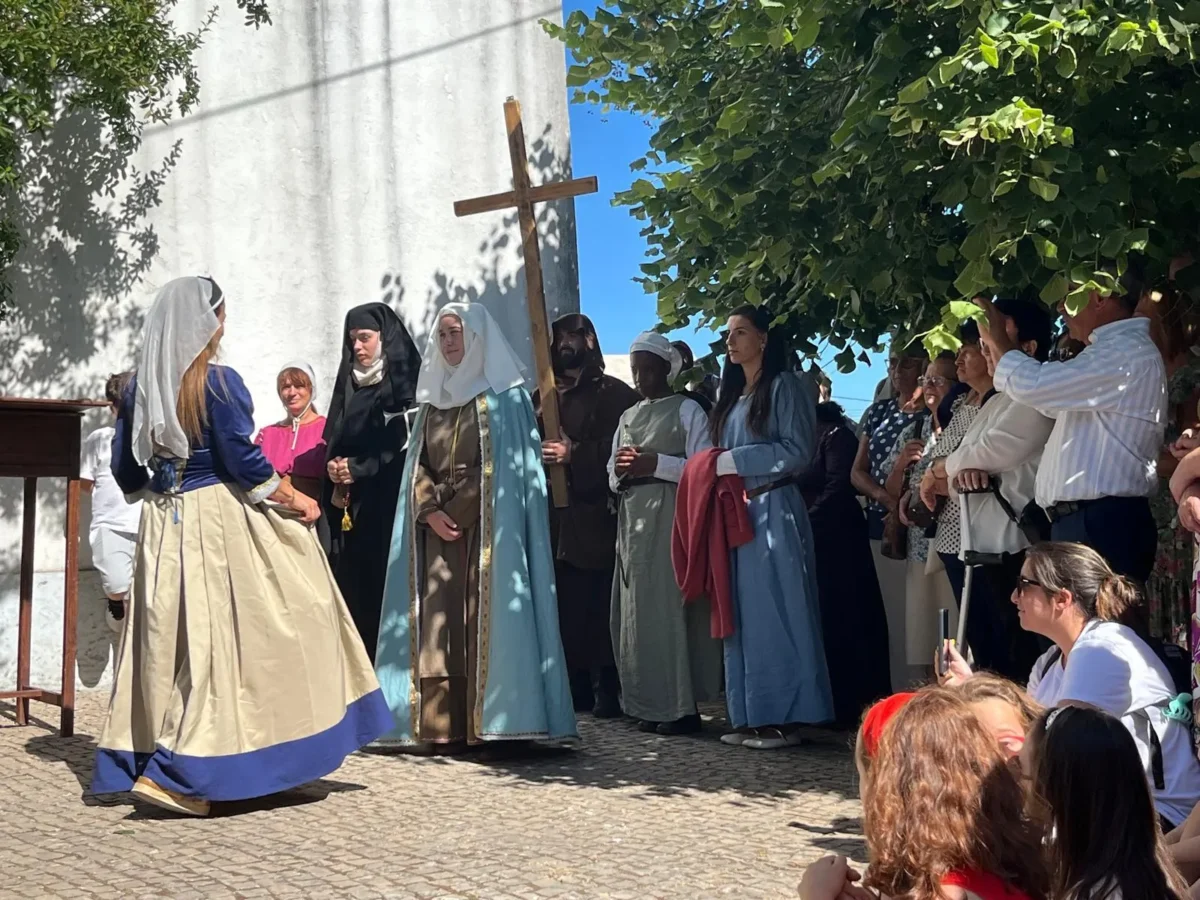
Last Sunday, July 6, the parish of Trouxemil, in the municipality of Coimbra, recreated the passage of Queen Saint Isabel de Aragão through the area, marking 700 years since the queen’s pilgrimage to Santiago de Compostela. The historical celebration began in the morning with the unveiling of a sculpture dedicated to the queen and continued in the afternoon with a re-enactment involving the local community.
The initiative was organised by the Parish Union of Trouxemil and Torre de Vilela, in collaboration with the local Church Council Fábrica da Igreja. It began with a solemn mass at the Church of São Tiago, presided over by the Bishop of Coimbra, D. Virgílio Antunes. After the service, the “Pilgrim Queen Saint Isabel” monument, created by sculptor Tatiana Santos, was officially unveiled. The ceremony was attended by city councillor Ana Bastos, representing Coimbra City Council.
In the afternoon, the historical re-enactment brought dozens of people to the parish church, where the arrival of the queen — widow of King Dinis — was staged. She was accompanied by her ladies-in-waiting and welcomed with flower petals and blessings. The event included participants in period costume, a donkey, and even a beggar figure, symbolising the queen’s well-known charitable spirit. The re-enactment, conceived by the theatre group Episódio, continued with a procession to Senhor dos Aflitos Square, where a medieval camp had been recreated. Visitors were invited to dress in historical garments and take part in the experience, which ended with a traditional communal meal.
The Parish Union added a charitable dimension to the celebration by producing official event cups, the sales of which fully support the Pedrinhas Association. Present at the event, the organisation provides support for children with cancer and other serious illnesses.
Trouxemil lies along the Portuguese Camino and is the parish with the longest stretch of the route in the Coimbra area, running from Bolão to Sargento-Mor. The tribute to the queen’s pilgrimage reinforces the local identity and highlights the historical connection between the parish and the Jacobean routes.
Source: Diário de Coimbra
